Cricket Test Accumulator Strategies: Tipster Networks and Layered Promotions in Series Play
Written by David Schulz · May 20, 2026

Cricket Test Accumulator Strategies: Tipster Networks and Layered Promotions in Series Play
Cricket test series create extended timelines that allow tipster networks to coordinate information across multiple days of play, and those same networks often combine successive promotions into accumulator chains that span several matches within one series. Observers note how data flows between connected tipsters who monitor pitch reports, player form metrics, and weather patterns while matching those insights to bookmaker offers that refresh at each interval.
Tipster Networks and Information Sharing Patterns
Networks operate through private channels where members exchange live updates on session-by-session developments, and this coordination lets participants identify value in both pre-match and in-play markets before odds adjust. Data from industry reports shows participants in such networks typically track at least three concurrent test matches during major bilateral series, allowing them to layer selections into multi-leg accumulators that run across different venues.
Researchers at sports analytics firms have documented how these groups maintain shared databases of historical test outcomes under similar conditions, and the databases feed into decisions about which bookmaker bonuses to activate first. One documented approach involves starting with a welcome free bet on the opening match, then rolling any returns into a boosted odds offer on the second test before finishing with a cashback promotion tied to the series result.
Promo Layering Mechanics During Test Series
Bookmakers release fresh promotions at each stage of a test series because the long format generates daily betting opportunities, and tipster groups time their accumulator builds to capture overlapping offers without breaching terms. Figures from betting exchange data providers indicate that promo stacking sequences in cricket test events often involve three or four separate incentives across a five-match series, with each layer applied only after the previous leg settles.
Take one network that tracked the 2025-26 India-Australia test tour; members activated a deposit bonus on day one of the first test, converted it into a matched free bet for the second test's top batsman market, and then applied a series winner enhanced odds promotion once the third test began. This sequence produced a chained return because each promotion reset the stake requirement while the accumulator legs remained live across the tour.
Accumulator Chain Construction in Practice
Accumulator chains gain stability when tipsters break selections into smaller correlated groups rather than single high-odds bets, and networks distribute risk by assigning different members to monitor specific markets such as run rates or wicket tallies. Evidence from performance tracking platforms reveals that chains built around test series frequently incorporate both team totals and individual player milestones because these outcomes unfold over multiple days and allow time for promotional windows to open.
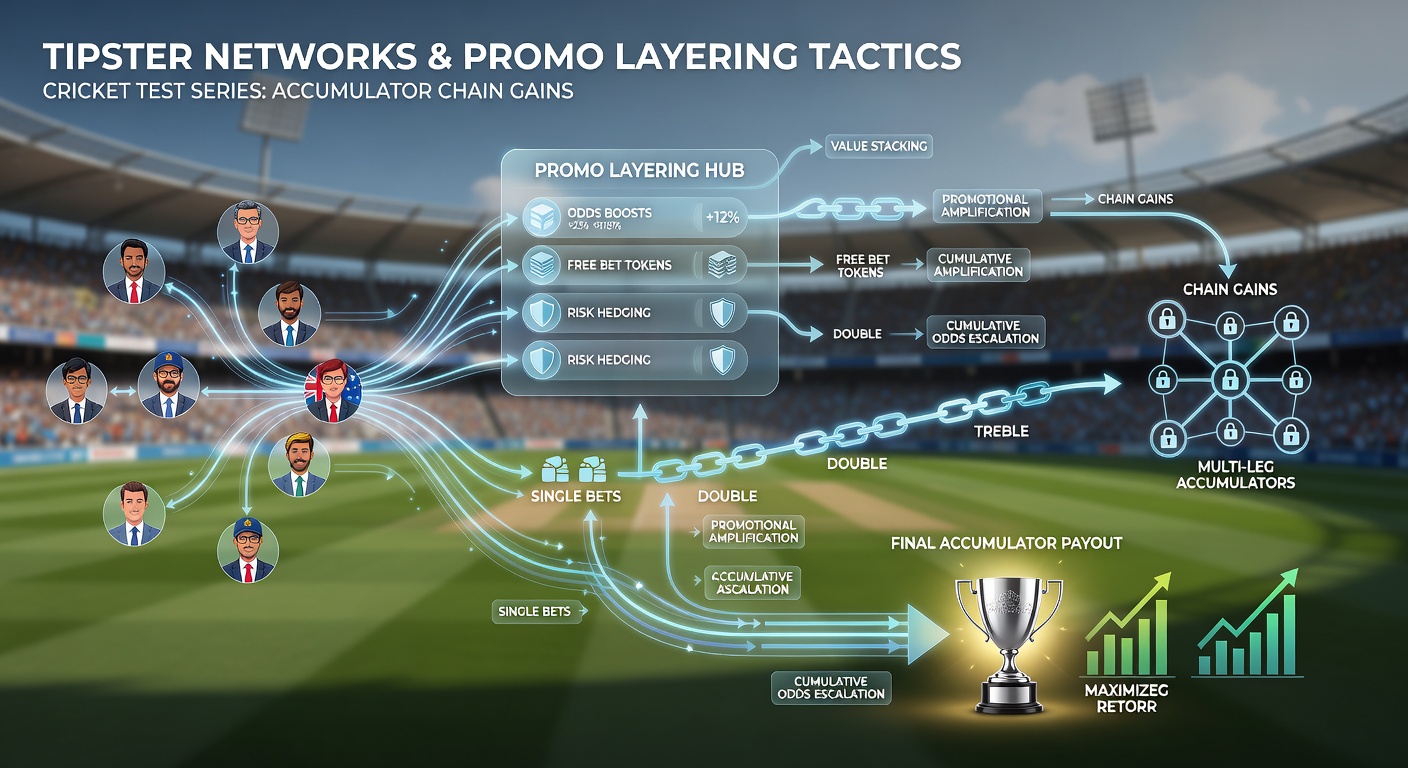
As the May 2026 schedule approaches with several bilateral test series confirmed across England, Australia, and South Africa, networks have already begun mapping which operators plan to release series-long cashback deals and which ones will focus on daily boosted specials. This advance planning lets groups align accumulator legs with the exact timing of each promotion release.
Regulatory Context and Operator Responses
International bodies such as the Esports Integrity Commission have expanded monitoring frameworks that now include cricket betting data, yet test match accumulators remain subject to standard responsible gambling rules that operators enforce through stake limits and verification checks. Meanwhile the Australian Communications and Media Authority has published updated guidelines on advertising disclosures that affect how tipster services promote their services during major series.
Operators respond by tightening terms around chained promotions, requiring each leg to meet minimum odds thresholds before returns can roll forward, and networks adapt by selecting markets that reliably clear those thresholds in test cricket conditions.
Conclusion
Tipster networks continue to refine methods for combining information sharing with timed promo activation across cricket test series, and the resulting accumulator chains reflect structured approaches to managing both risk and promotional value over extended match timelines. Data from multiple sources shows these tactics remain active wherever test calendars provide the multi-day windows needed for sequential layering to function.